
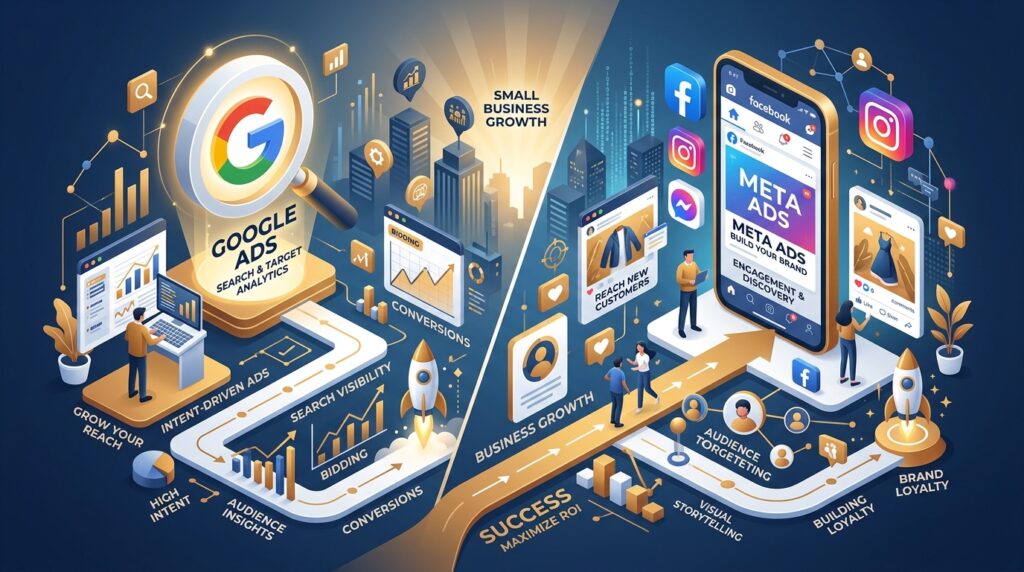
Running a growing business requires making critical financial decisions every day, especially when allocating your digital marketing budget. One of the most frequent questions business owners ask is: “Meta ads vs Google ads for small business—which advertising platform will deliver the fastest return on investment (ROI)?”
With advertising costs rising and consumer attention spans shrinking, choosing the wrong ad platform can quickly drain your budget without generating qualified leads or sales. Whether you operate a local service agency, an e-commerce store, or a consulting firm, understanding the fundamental mechanics of both platforms is essential before launching your next campaign.
In this comprehensive guide, we will break down the differences between Meta Ads (Facebook & Instagram) and Google Ads, analyze customer intent, compare cost metrics, and help you determine which channel will maximize your revenue in 2026. If your site is currently struggling to convert visitors, check out our guide on why your website gets no leads and how to fix it fast.
Understanding the Core Difference: Intent-Based vs. Interruption-Based Marketing
To evaluate Meta ads vs Google ads for small business growth, you must first understand how users interact with each platform. The fundamental distinction comes down to search intent versus discovery intent.
1. Google Ads: Capturing High-Intent Searchers
Google Search Ads operate on a pull-marketing model. When a prospective customer searches for “best local plumber near me” or “digital marketing consultant in Hyderabad”, they already have a problem and are actively seeking an immediate solution. Google displays targeted text ads right at the moment of highest purchasing intent.
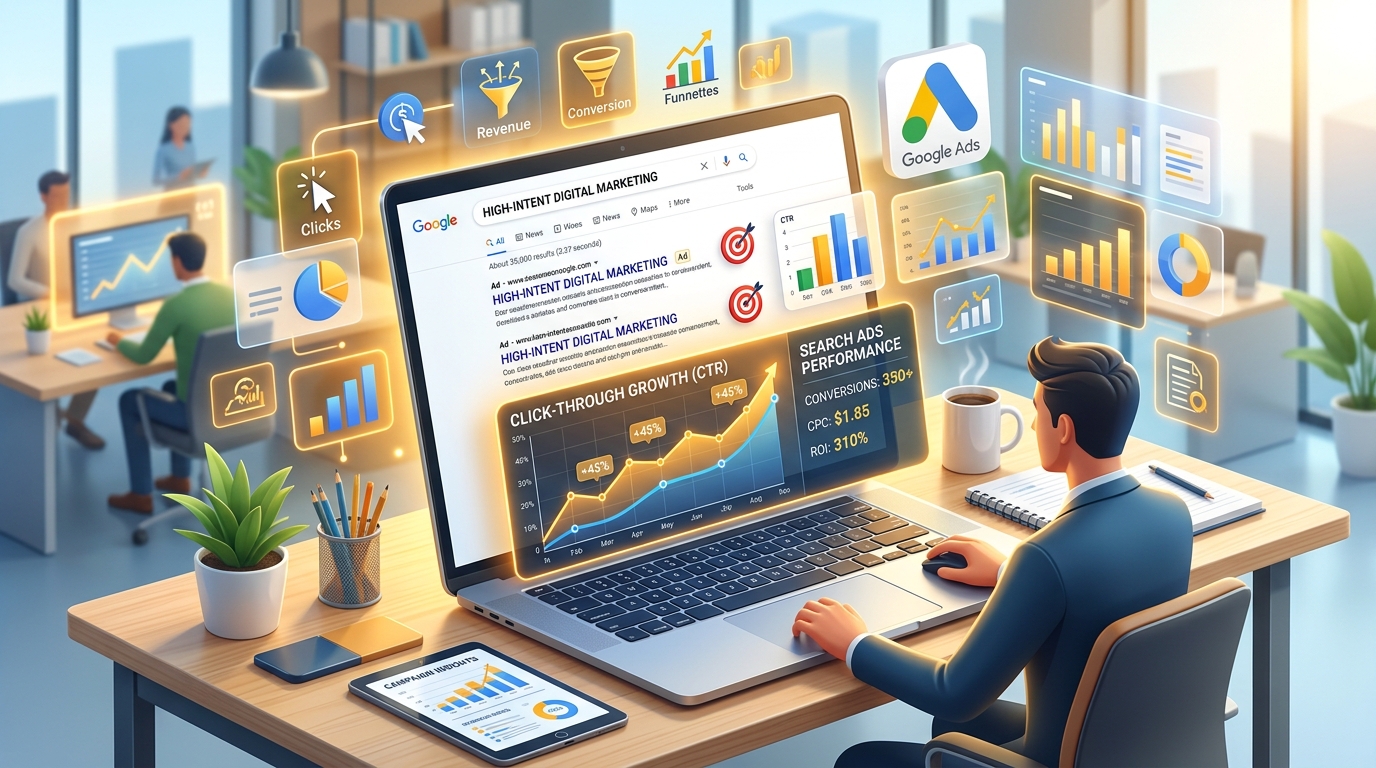
According to Google Ads Help, search ads place your business directly in front of buyers at the precise moment they are ready to convert. Learn more about optimizing your online visibility through our dedicated Search Engine Optimization and Paid Ads services.
2. Meta Ads: Driving Visual Discovery & Awareness
Meta Ads (operating across Facebook, Instagram, Messenger, and Audience Network) function on a push-marketing model. Users do not log onto Instagram to purchase plumbing services or accounting software; they log on to watch video reels, connect with friends, and view visual content. Meta Ads interrupt this browsing experience with highly engaging visual ads tailored to user interests, behaviors, and demographics.
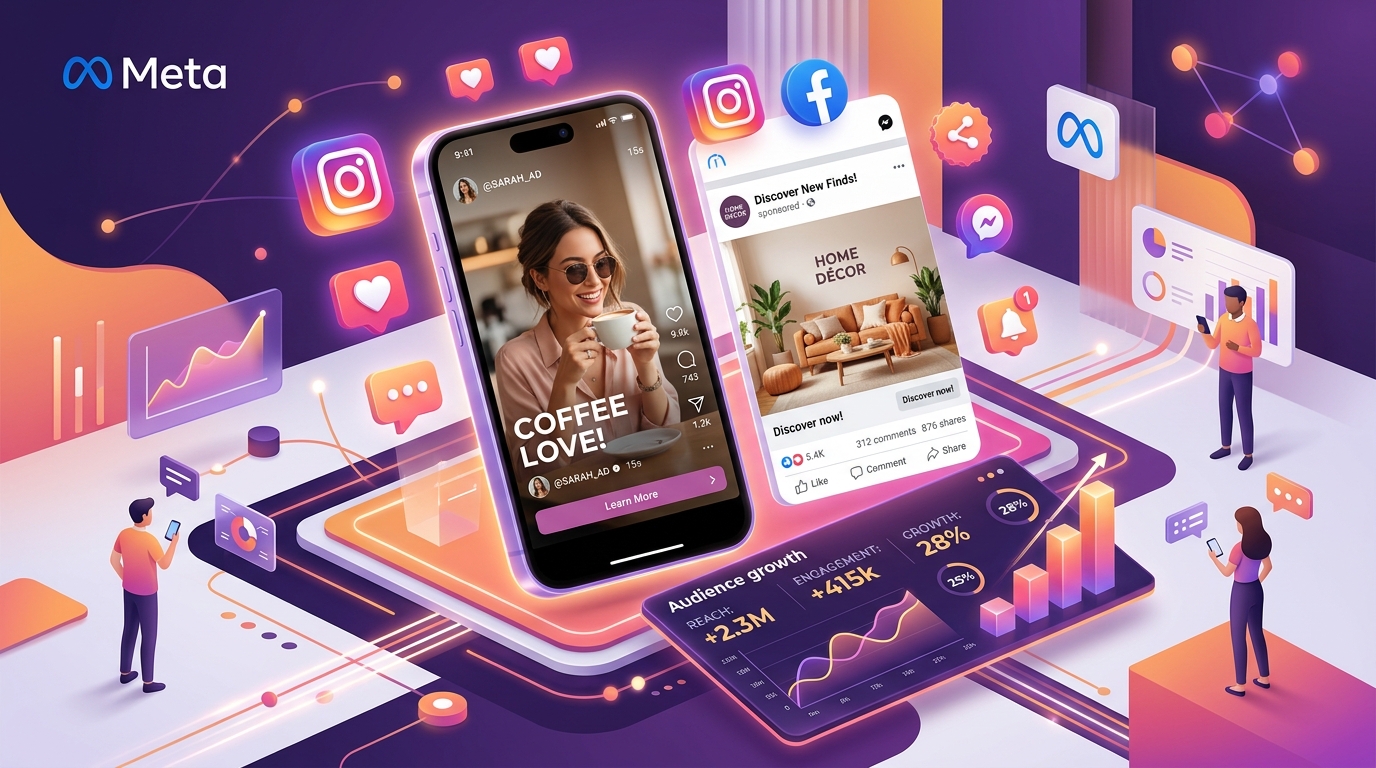
As documented in the Meta Business Help Center, Meta’s detailed targeting algorithm allows businesses to build brand desire and introduce products to audience segments who didn’t even know they needed them.
Deep Dive: Google Ads for Small Businesses
Google Ads remains the undisputed leader for capturing active demand. Below is a breakdown of why small businesses choose Google Search, Display, and Shopping campaigns.
Key Advantages of Google Ads
- Instant High-Intent Conversion: Clicks from search ads convert at a significantly higher rate because visitors are already at the bottom of the sales funnel.
- Local Search Dominance: Integrating Google Ads with your Google Business Profile helps dominate local map packs for immediate phone calls and direct store visits.
- Precise Keyword Bidding: You pay only when a prospective client actually clicks your link (Pay-Per-Click).
Drawbacks of Google Ads
- Higher Cost-Per-Click (CPC): Competitive industries can see CPCs ranging from $5 to $50+ per click.
- Zero Demand Creation: If people aren’t already searching for your novel product or innovative service, Google Search Ads won’t generate traffic.
Deep Dive: Meta Ads (Facebook & Instagram) for Small Businesses
Meta Ads excel at visual storytelling and audience building. For consumer brands, e-commerce stores, and visually appealing services, Meta is an indispensable growth engine.
Key Advantages of Meta Ads
- Lower Cost Per Impression & Engagement: You can reach thousands of potential buyers for a fraction of the cost of Google Search.
- Unmatched Visual Formats: Carousel ads, Instagram Reels, and interactive video ads allow you to demonstrate product benefits creatively. (See how we leveraged short-form content in our Chandumama & Sri Murugan Supermart case studies).
- Powerful Retargeting Pixels: Easily retarget visitors who abandoned their shopping carts or viewed specific landing pages.
Drawbacks of Meta Ads
- Ad Fatigue: Creatives wear out quickly. You must refresh images and video reels every 2–4 weeks to maintain strong CTRs.
- Lower Initial Purchasing Intent: Users may click an attractive ad but require multiple touchpoints before making a buying decision.
Side-by-Side Comparison: Meta Ads vs Google Ads for Small Business ROI
When comparing Meta ads vs Google ads for small business campaign planning, review this direct breakdown to match your business model:
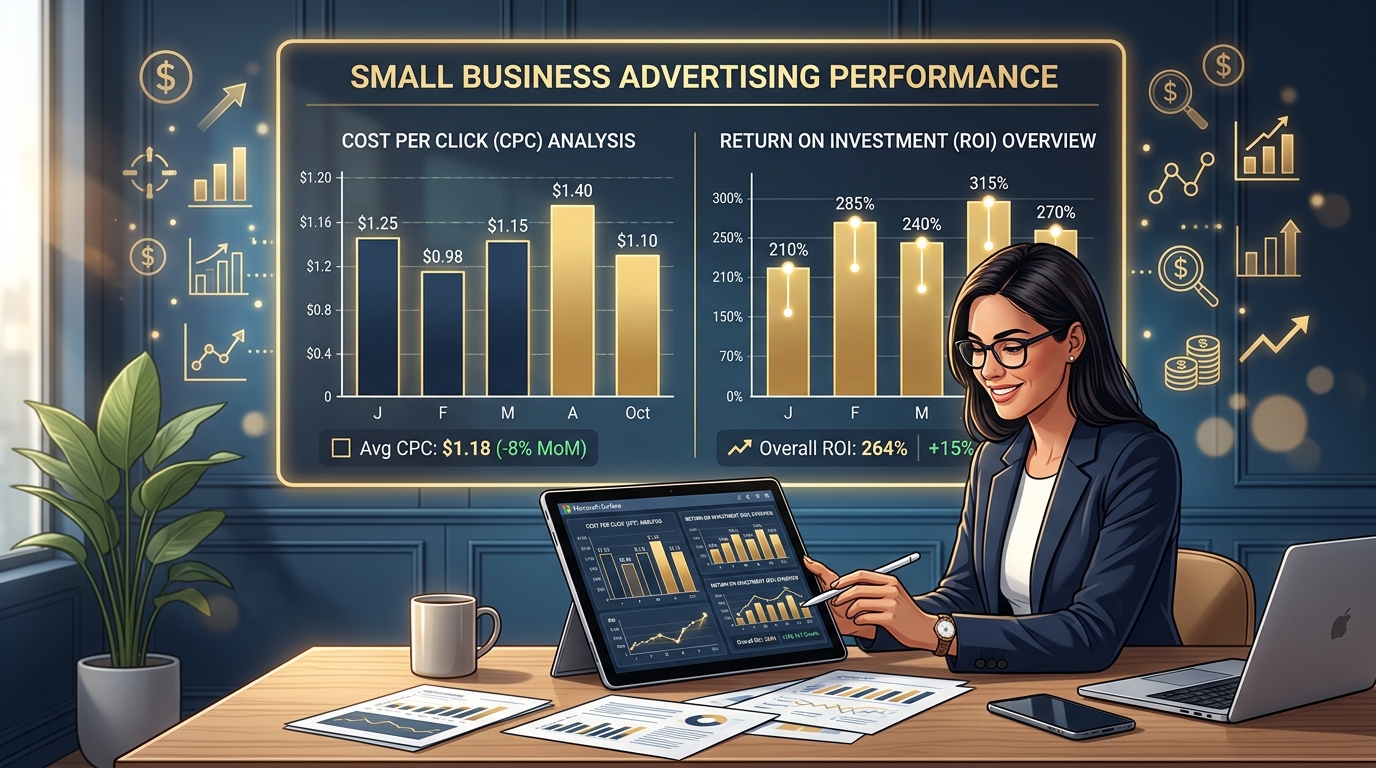
- Target Audience Intent: Google Ads targets Active Intent (High); Meta Ads targets Passive Discovery Intent (Medium).
- Average Cost-Per-Click: Google Ads ranges from $2.00 – $15.00+; Meta Ads ranges from $0.40 – $3.00.
- Best Ad Formats: Google Ads excels with Search Text Ads & Shopping Feeds; Meta Ads excels with Short Reels, Carousel & Video Ads.
- Speed to Conversion: Google Ads converts within hours/days; Meta Ads requires initial creative audience testing.
Which Platform Gives You Faster ROI in 2026?
The answer to which platform yields faster ROI depends directly on your business type:
Choose Google Ads First If:
- You offer immediate-need or local services: Emergency plumbing, dental clinics, legal consulting, home repairs, or local food delivery.
- Your audience searches with clear buy-intent keywords: People searching “hire digital marketer for small business” are ready to buy today.
- You have a high customer lifetime value (LTV): Higher CPCs are easily justified if one closing client yields thousands in revenue.
Choose Meta Ads First If:
- Your product is visually attractive: E-commerce apparel, custom gifts, home decor, handmade art, or food products.
- You are launching a new product category: When customers don’t know your product exists, search ads won’t work—you must show them visually on Instagram & Facebook.
- You want to build a loyal social community: Driving followers, video views, and brand engagement alongside sales.
Advanced Strategy: Combining Both Platforms for Maximum Scalability
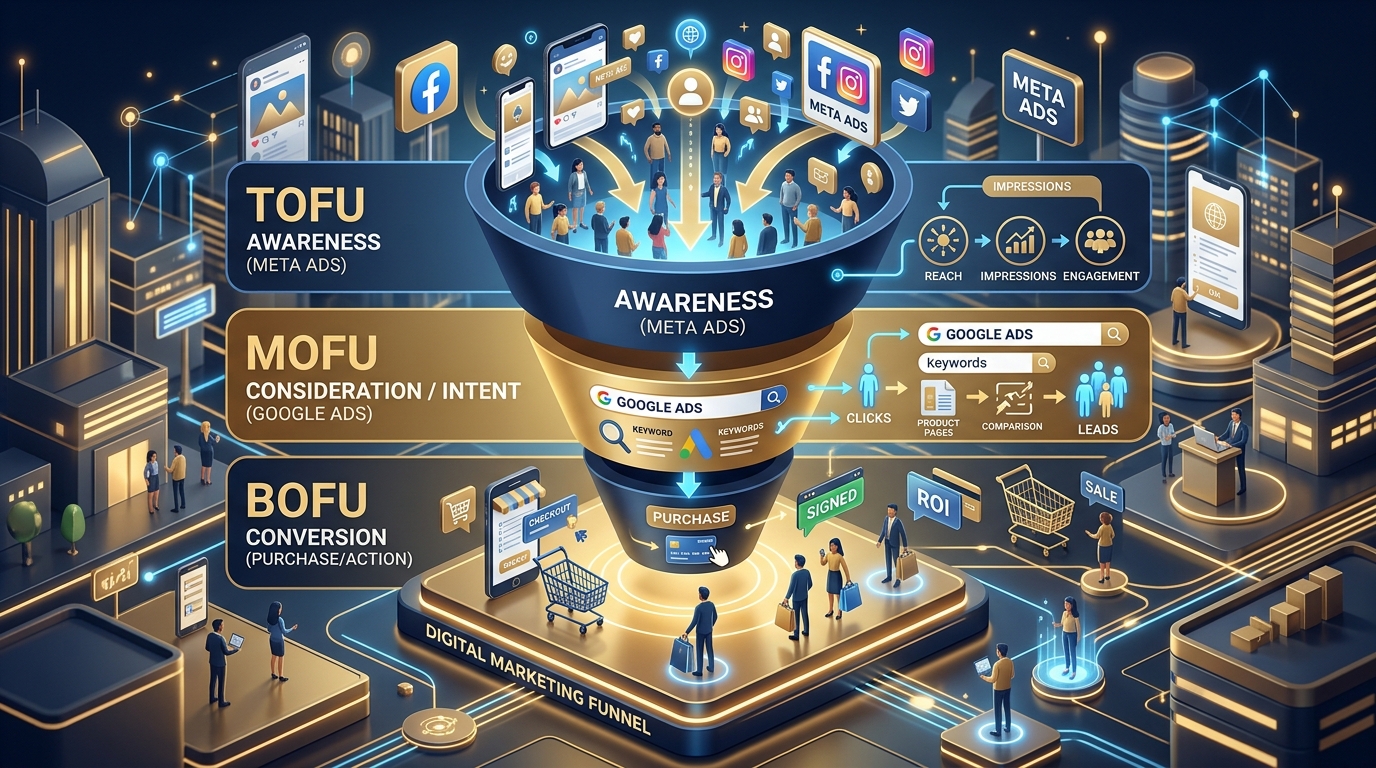
Rather than treating this as an “either/or” battle, high-growth businesses combine both platforms into a unified funnel:
Step 1: Top of Funnel (TOFU) with Meta Ads
Run engaging Instagram Reels and Meta video ads to build brand awareness and attract targeted traffic to your site at a low CPM.
Step 2: High-Intent Capture with Google Search Ads
Run targeted Google Search campaigns for exact keyword queries so you never miss a client who is actively searching for your service.
Step 3: Bottom of Funnel (BOFU) Retargeting
Use Meta Pixel retargeting ads to re-engage site visitors who left without filling out your contact form or completing a purchase.
For more detailed technical guidelines on web indexing and structured data, explore Google Search Central Documentation.
Conclusion: Your Action Plan for 2026

In the debate over Meta ads vs Google ads for small business, there is no single winner—only the right tool for your specific sales funnel. If you need urgent calls and leads, start with Google Search Ads. If you need brand exposure and visual engagement, start with Meta Ads.
Ready to transform your business traffic into consistent leads and sales?
🚀 Stop Guessing & Start Scaling Your Paid Ads Today!
Don’t burn your marketing budget on ad campaigns that don’t deliver. At Ratnam Digital, we build data-driven Google & Meta Ad strategies that maximize your return on ad spend and turn clicks into loyal clients.
👉 Book Your Free Consultation with Raja Ratnam Today | Explore Our Digital Marketing Services