
Table of Contents
- 1. The Paradigm Shift: From Conversational LLMs to Autonomous Execution Agents
- 2. Core Architecture: Multi-Agent Orchestration & Communication Protocols
- 3. Tool Selection, API Integration & Autonomous Decision Loops
- 4. Human-in-the-Loop (HITL) Governance & Safety Guardrails
- 5. High-Impact Enterprise B2B Use Cases
- 6. Enterprise Security, SOC2 Compliance & Sandboxed Execution
- 7. Measuring ROI: Cost Reduction vs Pipeline Velocity
- Frequently Asked Questions (FAQ)
1. The Paradigm Shift: From Conversational LLMs to Autonomous Execution Agents
The transition from generative AI to agentic AI is analogous to the evolution from static web pages to interactive web applications. Traditional LLMs are stateless function approximations: you provide input context, and the model predicts probable completion tokens. When a complex B2B workflow requires cross-referencing five disparate databases, executing calculations, and updating a Salesforce record, single-turn prompts invariably hallucinate or fail. Agentic AI solves this through dynamic state management and environmental persistence. An autonomous agent possesses working memory, access to specialized tools, and an overarching policy objective. When confronted with an enterprise problem, the agent constructs a directed acyclic graph (DAG) of necessary dependencies, runs intermediate steps in isolated sandboxes, and validates each output before proceeding to subsequent phases.2. Core Architecture: Multi-Agent Orchestration & Communication Protocols
Monolithic agents that attempt to perform research, data engineering, synthesis, and code execution simultaneously suffer from high cognitive degradation and context bloat. Modern enterprise deployments rely on multi-agent orchestration. In a hierarchical multi-agent framework, a central Supervisor Agent acts as project director. It decomposes incoming enterprise requests into specialized domains and delegates them to discrete worker agents: a Research Agent connected to enterprise vector embeddings, an Execution Agent with Python runtime access, and a Quality Verification Agent enforcing compliance rules. Communication between agents is governed by strict, structured schemas (such as JSON-RPC or protocol buffers) rather than loose natural language. This structured protocol eliminates ambiguity, maintains audit trails, and guarantees that outputs can be parsed deterministically by enterprise middleware.3. Tool Selection, API Integration & Autonomous Decision Loops
The engine powering agent autonomy is the cyclic feedback loop. Popularized by frameworks like ReAct (Reasoning and Acting) and Plan-and-Solve, agentic loops allow artificial intelligence models to observe their environment, form hypotheses, select appropriate software tools, inspect execution outputs, and self-correct when discrepancies occur.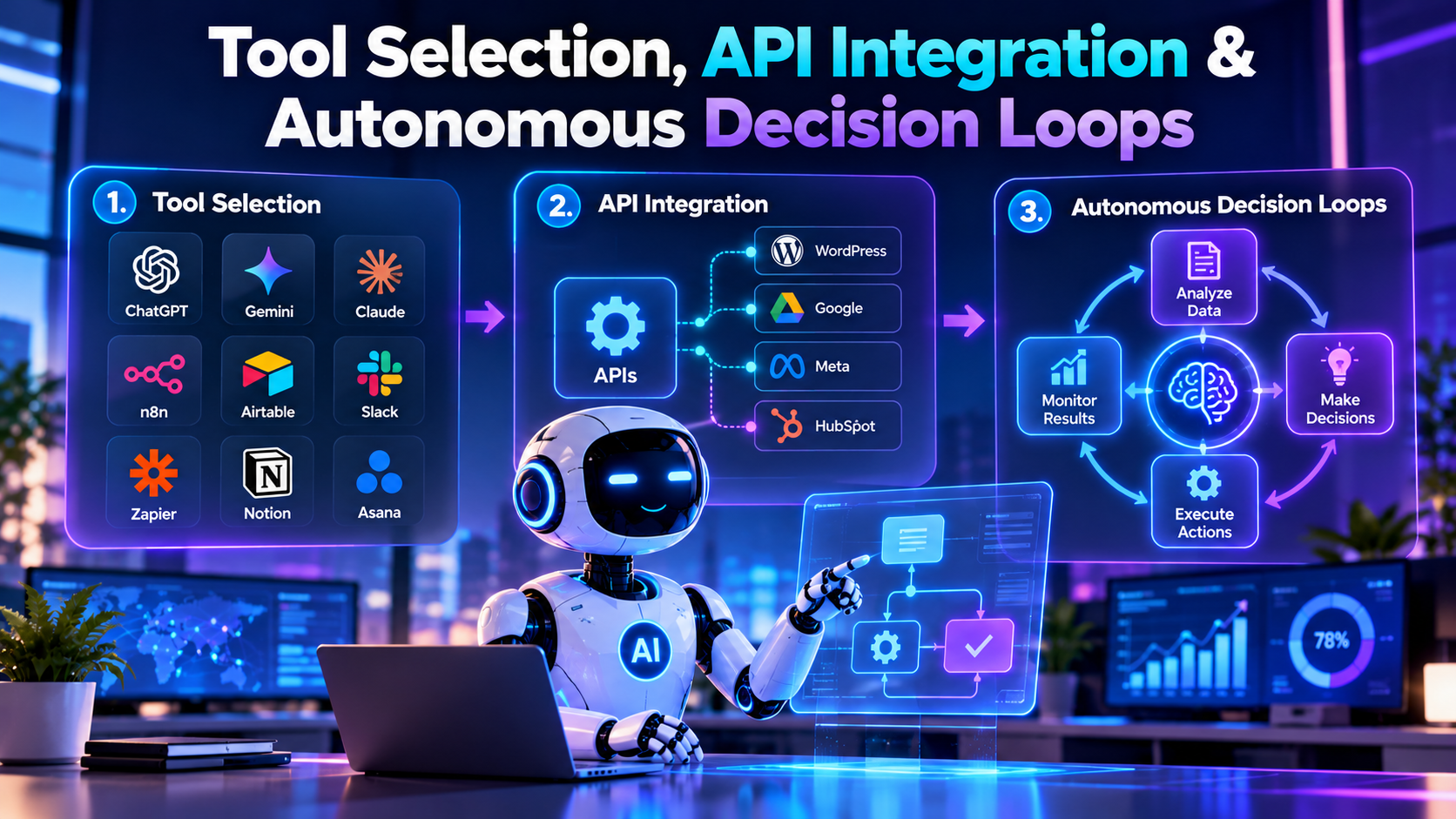
4. Human-in-the-Loop (HITL) Governance & Safety Guardrails
Total autonomy without oversight is an unacceptable risk for enterprise B2B organizations. Hallucinated contract terms or unauthorized database mutations can cause catastrophic legal and commercial exposure. The hallmark of an enterprise-ready agentic system is robust Human-in-the-Loop (HITL) governance. Effective governance frameworks establish clear confidence threshold gates. Routine, reversible tasks (such as pulling an analytics summary or categorizing a customer ticket) execute fully autonomously. However, whenever an action exceeds defined risk parameters – such as adjusting pricing tiers, dispatching external communications to enterprise buyers, or modifying production database records – the agent pauses execution, generates an immutable diff log, and requests executive sign-off.5. High-Impact Enterprise B2B Use Cases
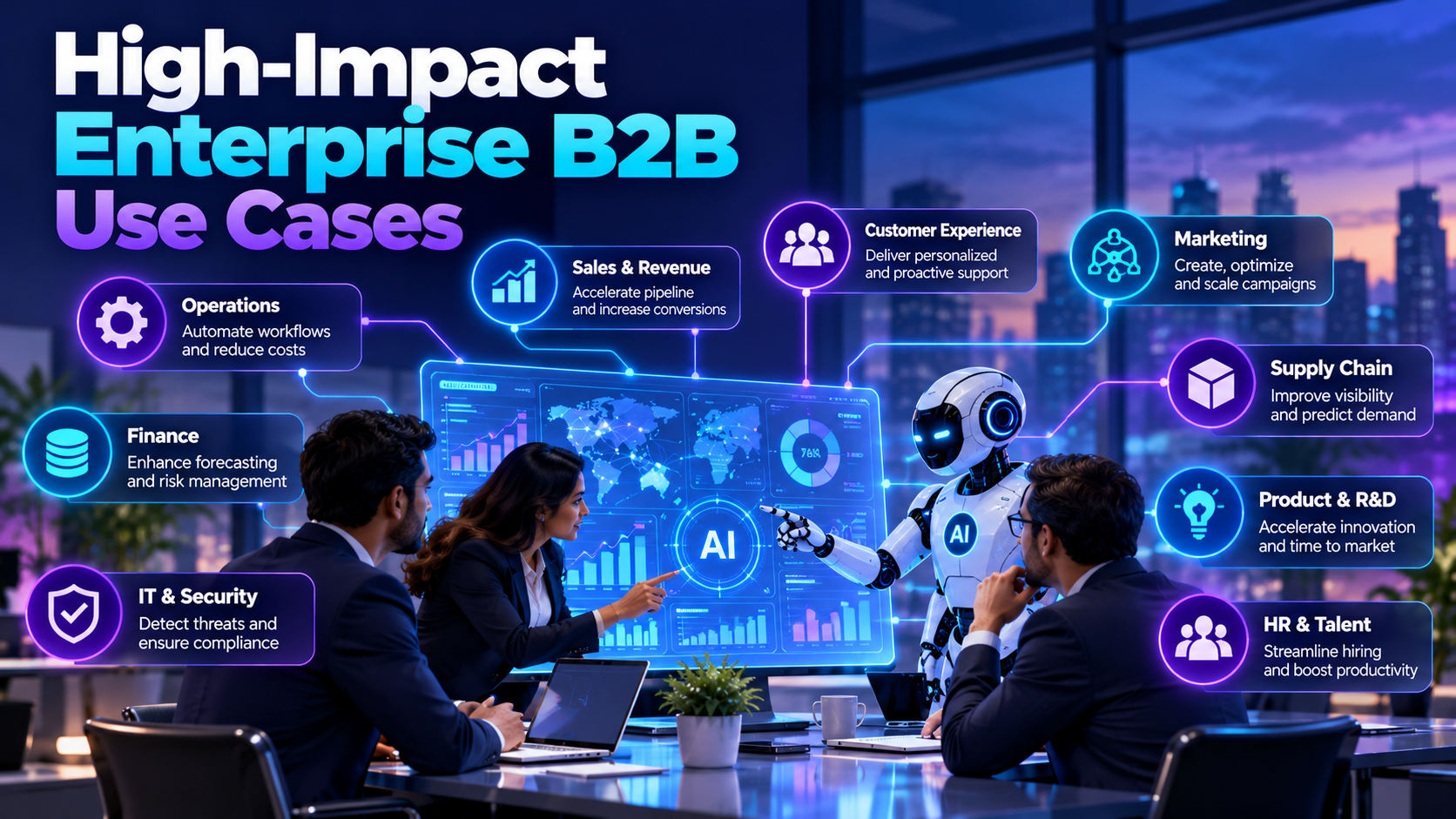
Organizations deploying agentic workflows in 2026 are focusing on three primary operational engines:- Autonomous Inbound Qualification & Research: Agents conduct deep account research on inbound leads in under 90 seconds, assessing tech stack compatibility, recent funding announcements, and executive turnover before notifying sales leaders.
- Continuous SEO & AEO Optimization: Multi-agent systems monitor search engine crawl logs, diagnose indexation anomalies, and optimize content structure for answer engines like Perplexity, ChatGPT, and Google AI Overviews.
- Contract Compliance & RFP Response Automation: Agents ingest complex enterprise RFP documents, cross-reference historical technical proposals, draft compliant responses, and flag potential SLA risks for legal counsel.
6. Enterprise Security, SOC2 Compliance & Sandboxed Execution
Deploying agentic AI requires enterprise-grade infrastructure isolation. Agents executing code or querying proprietary datasets must operate within ephemeral, sandboxed microVMs with zero egress access to unauthorized network zones. Comprehensive audit logging records every tool call, database query, and model completion in write-once-read-many (WORM) storage, ensuring full compliance with SOC2 Type II, GDPR, and ISO 27001 standards.7. Measuring ROI: Cost Reduction vs Pipeline Velocity
While traditional automation is evaluated purely on headcount hours saved, agentic workflows generate asymmetric returns through pipeline velocity. When enterprise inquiries that previously took 48 hours to research and qualify are addressed within 5 minutes, conversion rates increase by up to 340%. By combining automated data enrichment with proactive execution, B2B brands accelerate deal cycles and maximize organic customer acquisition efficiency.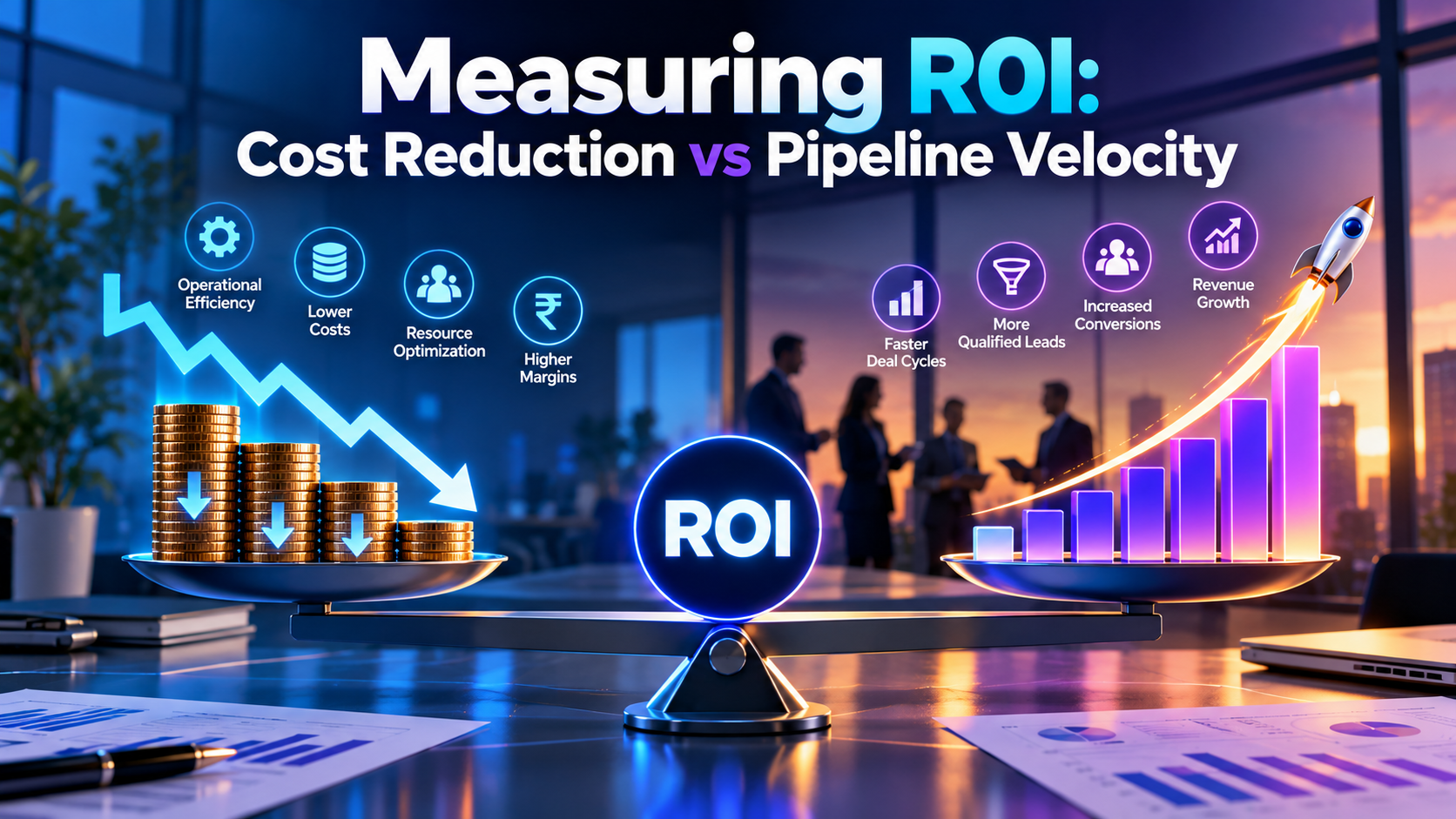
Frequently Asked Questions (FAQ)
What is the difference between Generative AI and Agentic AI in enterprise operations?
Generative AI focuses on content generation based on single-turn human prompts, whereas Agentic AI possesses autonomous goal-seeking capabilities. Agentic AI can break complex objectives into multi-step execution plans, call external software tools and APIs, evaluate environmental feedback, and iteratively refine its work until the desired outcome is achieved.How do multi-agent systems prevent infinite execution loops or resource exhaustion?
Enterprise multi-agent systems enforce strict operational guardrails, including maximum step limits (recursion ceilings), token budget quotas, state timeout thresholds, and dead-letter queues. If an agent fails to achieve state convergence within configured boundaries, the supervisor agent halts the task and escalates to a human operator.Can agentic AI workflows integrate with proprietary B2B CRMs like HubSpot and Salesforce?
Yes. Modern agentic frameworks integrate seamlessly with enterprise CRMs via OpenAPI specifications, RESTful endpoints, and GraphQL interfaces. Agents can read pipeline stages, enrich contact records, log interaction notes, and trigger automated sales workflows based on verified real-world triggers.What role does Human-in-the-Loop (HITL) play in autonomous B2B agent deployments?
Human-in-the-Loop (HITL) provides necessary safety and compliance oversight. While routine low-risk tasks execute automatically, critical decisions – such as contract approvals, pricing overrides, or bulk external communications – require explicit human authorization before execution proceeds.How does agentic AI impact search visibility on AI answer engines like Perplexity and ChatGPT?
Agentic AI empowers teams to implement continuous Generative Engine Optimization (GEO). Multi-agent systems analyze how answer engines synthesize corporate brand information, identify knowledge graph gaps, and optimize technical structured data to ensure high-authority citations in conversational search results.What infrastructure is required to deploy secure enterprise AI agents?
Enterprise agent deployments require a high-concurrency LLM orchestration layer (e.g., LangGraph, AutoGen, or custom agent runtimes), isolated sandboxed execution environments (such as Docker or microVMs), secure vector databases for retrieval-augmented generation (RAG), and comprehensive telemetry/audit logging.Related Growth Playbooks & Strategic Resources
Internal Blueprints & Solutions
Scale Your Agentic AI Workflows with Ratnam Digital
Transform manual B2B processes into predictable revenue engines. Partner with Ratnam Digital to deploy autonomous, human-in-the-loop AI pipelines that protect pipeline and accelerate growth.
Explore B2B AI Automation Request a Strategy & Growth Audit